
GBP/JPY climbs towards 154.00 after the big technical breakout
- GBP/JPY looks north amid a triangle breakout on the daily chart.
- Upside potential remains intact while above 152.45.
- RSI points higher above the midline, allowing room for more gains.
GBP/JPY is extending its bullish momentum into the third straight day on Monday, kicking off the week on the right footing.
The risk-on market mood is fuelling the latest advance in the cross, as the rally in the US oil past the $80 threshold offers investors the renewed cheer.
Meanwhile, the US dollar remains on the back foot amid the disappointing NFP reading and a better appetite for riskier assets, as markets shrug off the latest US-China tussle over Taiwan and phase one trade deal.
From a short-term technical perspective, the gains in GBP/JPY are courtesy of a symmetrical triangle breakout confirmed on the daily chart after the bulls recaptured strong resistance at 152.45 on a daily closing basis last Friday.
That level is the confluence of the bearish 100-Daily Moving Average (DMA) and the triangle resistance.
Bulls now target the 154.00 round number on its way northwards, above which the June 23 highs of 155.15 could be on their radars.
The 14-day Relative Strength Index (RSI) points north above the midline, suggesting that there is more room for the upside.
GBP/JPY: Daily chart
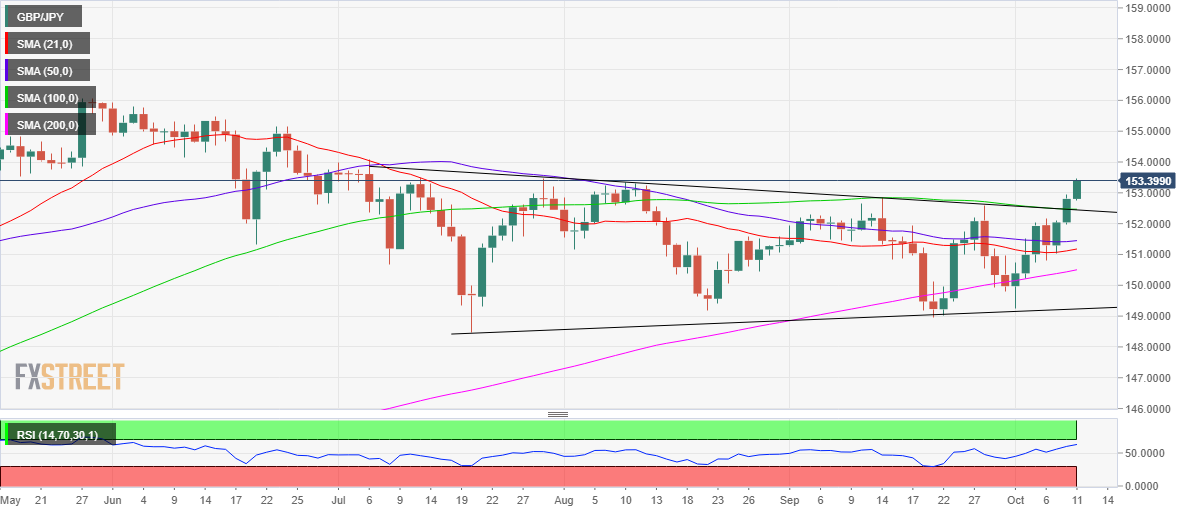
Alternatively, any retracement could meet strong demand at the previous fierce resistance now support at 152.45.
If the selling pressure intensifies, then the bears could target the horizontal 50-DMA support at 151.45.
GBP/JPY: Additional levels to consider